Tribal knowledge dependency — much of the operational and systems knowledge existed only in the heads of individuals across teams. Surfacing and documenting it required significant facilitation effort rather than desktop research.
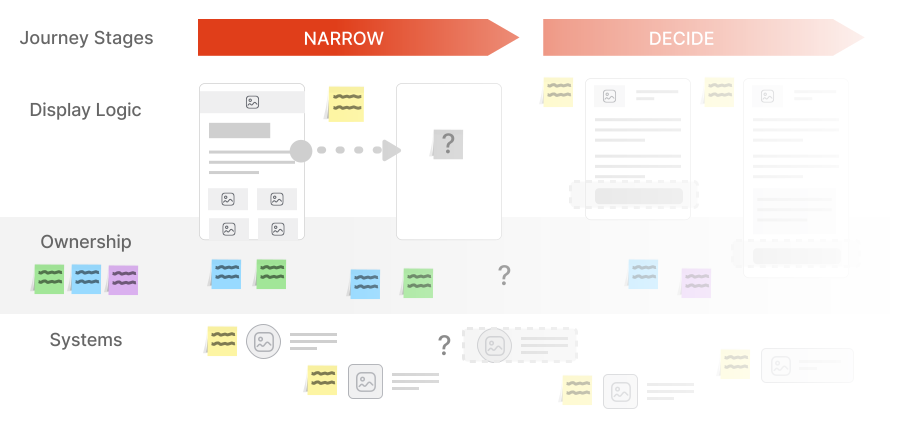
Fragmented ownership — no single team had full visibility of the end-to-end journey. Ownership was split across product, engineering, and operations, making alignment workshops complex to facilitate and time-consuming to run.
Multiple systems involved — the journeys spanned multiple platforms and system dependencies, each owned by different teams with different priorities and release cycles.
No existing framework — there was no established service design methodology or blueprint template within the organisation. The framework had to be developed and validated as part of the project itself.