Regulatory · Validation

REGULATORY · VALIDATION

NBN Transfer Compliance Experience

Integrating regulatory ownership verification into the NBN sign-up journey without increasing checkout friction.

Regulatory

Validation

Accessibility

Multi-brand

SCALABILITY

Illustration of NBN ownership verification within a home internet checkout journey.

Overview

Role

Lead UX/Product Designer

Brand

Vodafone & TPG

Focus

Regulatory Compliance & Checkout

Methods

Workshops, Journey Mapping, Prototyping, Usability Testing

Outcome

100% compliance achieved across 4 platforms

Timeline

Q4, 2024 - Q1, 2025

The Challenge

Customers transferring to the NBN service needed to verify their ownership through AVC ID (Access Virtual Circuit Identifier) during checkout.

Since most users are unfamiliar with this technical identifier, there was a significant risk of confusion and journey abandonment during sign-up.

My role was to integrate regulatory requirements into the checkout journey across Vodafone and TPG while maintaining clarity, trust, and conversion.

Customers transferring to the NBN service needed to verify their ownership through AVC ID (Access Virtual Circuit Identifier) during checkout.

Since most users are unfamiliar with this technical identifier, there was a significant risk of confusion and journey abandonment during sign-up.

My role was to integrate regulatory requirements into the checkout journey across Vodafone and TPG while maintaining clarity, trust, and conversion.

Business Requirements

Meet NBN regulatory ownership verification requirements

Meet NBN regulatory ownership verification requirements

Maintain sign-up conversion rates during compliance rollout

Maintain sign-up conversion rates during compliance rollout

Reduce support contacts and activation friction

Ensure functional parity across Vodafone and TPG platforms

Ensure functional parity across Vodafone and TPG platforms

Maintain security and compliance standards

Reduce ownership errors and post-order support contacts

Reduce ownership errors and post-order support contacts

Challenges

AVC ID Knowledge Gap — most users are unfamiliar with this technical identifier, leading to confusion and potential journey abandonment

AVC ID Knowledge Gap — most users are unfamiliar with this technical identifier, leading to confusion and potential journey abandonment

Mandatory Validation Friction — introducing a mandatory verification step during checkout risked losing sign-up momentum and conversion rates

Mandatory Validation Friction — introducing a mandatory verification step during checkout risked losing sign-up momentum and conversion rates

System Architecture Complexity — designing for legacy and future-state platforms across two brands required functional parity despite technical constraints

System Architecture Complexity — designing for legacy and future-state platforms across two brands required functional parity despite technical constraints

Risks & Constraints

Multi-platform Complexity

Ownership verification needed to work consistently across multiple legacy and transformation platforms with different technical capabilities and customer journeys.

Regulatory Compliance

Verification requirements were mandatory, but introducing unnecessary steps risked reducing customer confidence and conversion.

Technical Constraints

The solution had to support future providers and channels while remaining maintainable across multiple brands.

Customer Experience

Compliance needed to be embedded naturally into the checkout journey without making verification feel like an obstacle.

MY ROLE

What I owned

End-to-end UX design across both the Vodafone and TPG acquisition journeys — from regulatory requirement translation through to interaction design, prototyping, and usability testing. I led workshops to align stakeholders on requirements and constraints, defined the verification interaction architecture across platforms, and owned all design decisions across happy path and edge cases including error states and fallback options.

What others owned

Engineering defined the technical constraints and platform capabilities for each design system. Product managed regulatory requirements, scope, and delivery timelines. Architecture led the platform migration roadmap which influenced which technical approaches were feasible.

My Approach

Understand

Researched the existing NBN acquisition journey, identified where ownership verification would be introduced, and assessed the risk of user drop-off and confusion at that point in the checkout flow.

Researched the existing NBN acquisition journey, identified where ownership verification would be introduced, and assessed the risk of user drop-off and confusion at that point in the checkout flow.

Align

Led workshops with product, engineering, architecture, and support teams to clarify regulatory requirements, map affected journeys, and identify technical constraints across legacy and future-state platforms.

Led workshops with product, engineering, architecture, and support teams to clarify regulatory requirements, map affected journeys, and identify technical constraints across legacy and future-state platforms.

Design

Designed a structured ownership verification interaction using progressive disclosure — balancing mandatory compliance requirements with checkout momentum through on-page alerts, deep-dive help links, and clear fallback paths.

Designed a structured ownership verification interaction using progressive disclosure — balancing mandatory compliance requirements with checkout momentum through on-page alerts, deep-dive help links, and clear fallback paths.

Validate

Tested the interaction through qualitative and quantitative task analysis across both happy path and unhappy path scenarios.

Tested the interaction through qualitative and quantitative task analysis across both happy path and unhappy path scenarios.

Key Decisions

Before

No ownership verification — users proceeded through checkout without proof of service ownership, resulting in ownership errors identified only after service transfer.

No Ownership Check
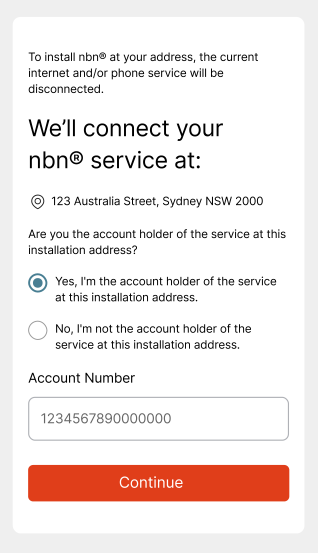
no ownership check

Order Approved

order approval without ownership verification

Issue Reported by the Affected Owner

Issue reported by affected owner

After

Structured verification integrated at checkout — users confirm ownership or provide AVC ID before proceeding, with clear fallback options if they can't provide it immediately.

Ownership Verified During Checkout
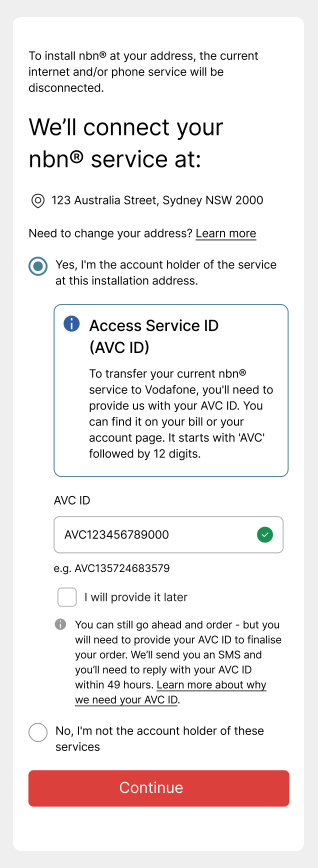
Ownership verified during checkout

Fallback Ownership Verification by SMS Before Order Completion
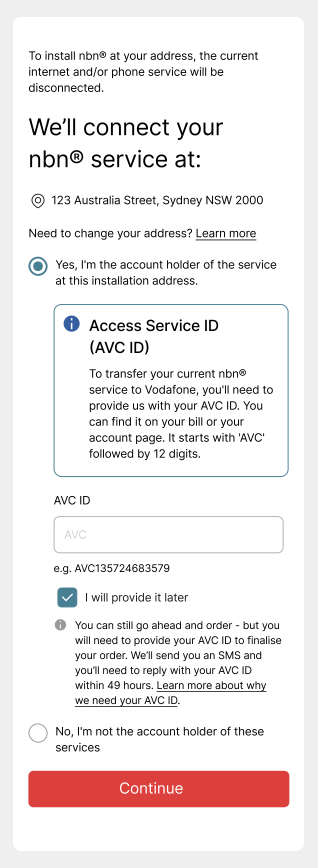
Checking provide it later as a fallback
avcid SMS as a fallback

Ownership Verified for All NBN Orders

Build for Future Expansion

Prioritised Vodafone legacy while ensuring TPG transformation platform compatibility, so the solution could scale across both brand roadmaps.

Reveal Complexity Progressively

Balanced on-page alerts with deep-dive help links to protect checkout momentum while providing sufficient guidance for users unfamiliar with AVC ID.

Design with Platform Constraints

Adapted interaction patterns to suit each brand's design system and component library while maintaining a core architectural framework.

Design Resilient Error Handling

Engineered clear feedback loops and high-fidelity error states to guide users through incorrect or failed ownership checks.

Validation

Validated the interaction through qualitative and quantitative task analysis across happy path and unhappy path scenarios.

Validated the interaction through qualitative and quantitative task analysis across happy path and unhappy path scenarios.

Qualitative Insights

Users understood the AVC ID and its necessity via surface-level guidance alone, without clicking Learn More

Users understood the AVC ID and its necessity via surface-level guidance alone, without clicking Learn More

Participants clearly understood where to locate their AVC ID

Participants clearly understood where to locate their AVC ID

Participants clearly understood the post-submission process and how to finalise their order

Participants clearly understood the post-submission process and how to finalise their order

Refined messaging was easy to digest without distracting from the checkout flow

Refined messaging was easy to digest without distracting from the checkout flow

Key Results

100%

Task completion — happy path and unhappy path

90%

Ease of use — happy path

70%

Ease of use — unhappy path

90%

Confidence — happy path and unhappy path

Outcome & Impact

The ownership verification interaction was implemented within the NBN acquisition journey across Vodafone and TPG platforms, enabling customers to verify service ownership during sign-up while maintaining a smooth checkout experience.

The ownership verification interaction was implemented within the NBN acquisition journey across Vodafone and TPG platforms, enabling customers to verify service ownership during sign-up while maintaining a smooth checkout experience.

100% Compliance Achieved

Mandatory regulatory requirement met across all platforms before the go-live date

Mandatory regulatory requirement met across all platforms before the go-live date

Cross-Brand Implementation

Solution scaled across Vodafone and TPG design systems with brand-specific aesthetics maintained

Solution scaled across Vodafone and TPG design systems with brand-specific aesthetics maintained

Scaled Across 4 Platforms

Delivered functional parity across legacy and transformation platforms for both brands

Delivered functional parity across legacy and transformation platforms for both brands

Maintained Conversion Stability

Checkout conversion rates remained stable following the compliance rollout

Checkout conversion rates remained stable following the compliance rollout

AI in my practice

AI tools supported my work in translating regulatory requirements into design briefs, synthesising workshop outputs, and exploring edge case scenarios — accelerating alignment while keeping human judgement at the core of every design decision

AI tools supported my work in translating regulatory requirements into design briefs, synthesising workshop outputs, and exploring edge case scenarios — accelerating alignment while keeping human judgement at the core of every design decision

Tools used

Figma AI

Figma AI

UserTesting

ChatGPT

Microsoft Copilot

Microsoft Copilot

UserTesting

ChatGPT

ChatGPT

Used to explore plain language alternatives for AVC ID guidance copy, testing different levels of technical explanation before user testing.

Used to explore plain language alternatives for AVC ID guidance copy, testing different levels of technical explanation before user testing.

Figma AI

Figma AI

Used to accelerate early component variant exploration across the four platform design systems before refinement and stakeholder review.

Used to accelerate early component variant exploration across the four platform design systems before refinement and stakeholder review.

Microsoft Copilot

Microsoft Copilot

Used to synthesise workshop notes from multi-stakeholder alignment sessions into structured requirement summaries, reducing documentation time and allowing more focus on design exploration.

Used to synthesise workshop notes from multi-stakeholder alignment sessions into structured requirement summaries, reducing documentation time and allowing more focus on design exploration.

UserTesting AI

UserTesting AI

Used to summarise participant observations and compare findings against manual qualitative analysis during usability testing.

Used to summarise participant observations and compare findings against manual qualitative analysis during usability testing.

Tools used

ChatGPT

Figma AI

Microsoft Copilot

UserTesting

AI in my practice

AI tools supported my work in translating regulatory requirements into design briefs, synthesising workshop outputs, and exploring edge case scenarios — accelerating alignment while keeping human judgement at the core of every design decision

Tools used

Figma AI

UserTesting

Microsoft Copilot

UserTesting

ChatGPT

Used to explore plain language alternatives for AVC ID guidance copy, testing different levels of technical explanation before user testing.

Figma AI

Used to accelerate early component variant exploration across the four platform design systems before refinement and stakeholder review.

Microsoft Copilot

Used to synthesise workshop notes from multi-stakeholder alignment sessions into structured requirement summaries, reducing documentation time and allowing more focus on design exploration.

UserTesting AI

Used to summarise participant observations and compare findings against manual qualitative analysis during usability testing.

Tools used

ChatGPT

Figma AI

Microsoft Copilot

UserTesting

Reflection

The biggest challenge in this project was not the verification itself, but introducing it in a way that customers could understand without disrupting the checkout journey. Working within multiple legacy systems reinforced the importance of designing with technical and regulatory constraints rather than around them. This experience strengthened my belief that well-defined constraints often lead to clearer, more practical design decisions.
More case studies

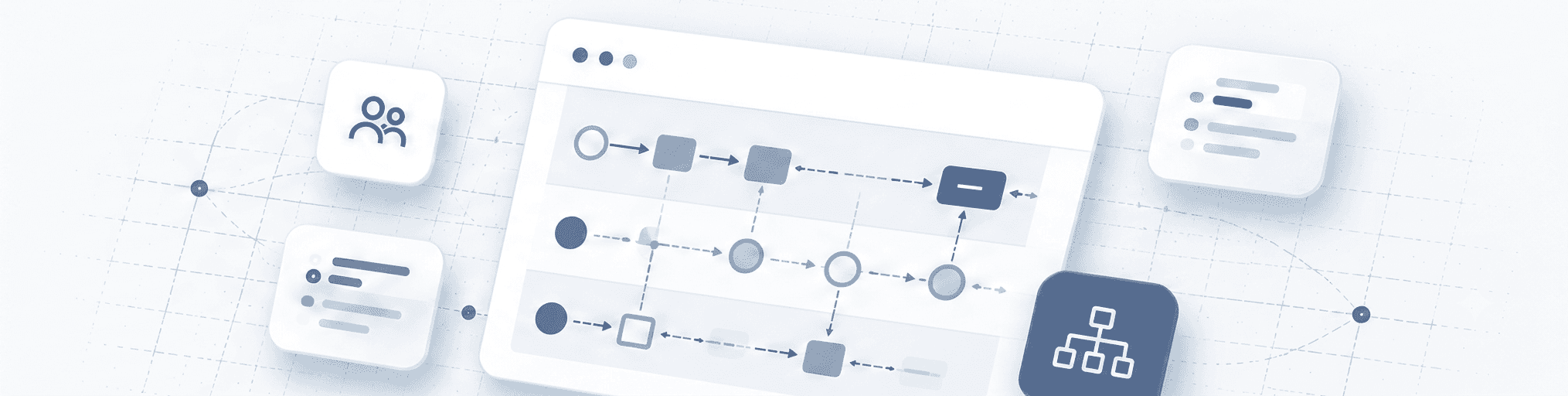
Service blueprint showing links between customer touchpoints, teams, systems and operational processes.

Service · Systems

Service Journey Blueprinting

Mapping service dependencies and operational touchpoints to enable cross-functional alignment.

View Case Study

Before-and-after device card comparison showing increased information density and scannability.

Product · Optimisation

Device Card CTR Uplift

Improving device comparison and selection within the mobile purchase journey.

View Case Study

Illustration of a digital eSIM activation journey across purchase, preparation, activation and connection.

Journey · Transformation

Prepaid eSIM Activation

Extending eSIM capability to prepaid customers within a decade-old legacy platform.

View Case Study

Available for Product Design opportunities, consulting and collaboration.